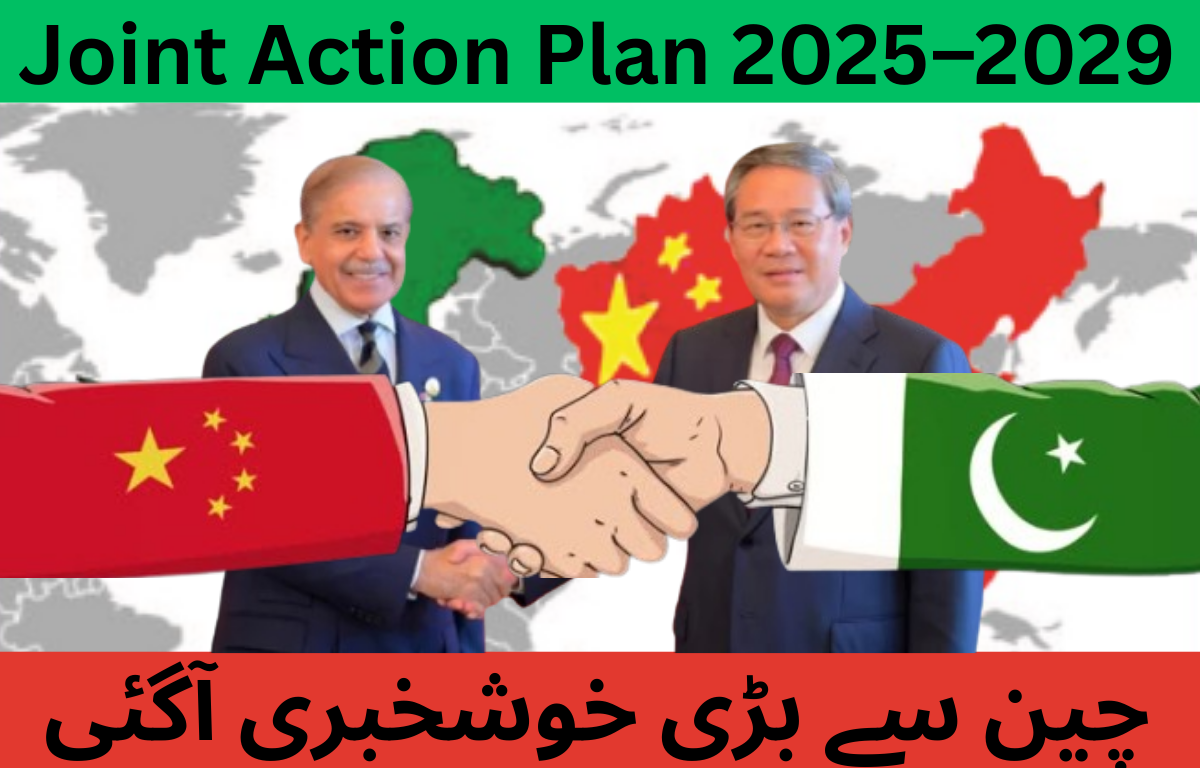
Joint Action Plan 2025–2029, Pakistan and China proclaimed their connection as strategic partners for the first time on September 4, 2025, and began working on the Master Action Plan for the years 2025 to 2029. This ‘policy’ document, as some may refer to it, aims to reconstruct the very fabric of a nation its culture, rest on its religious pillars and external diplomacy of Pakistan. The Master Action Plan document is more than a complex piece of work.
Also Read Joint Action Plan 2025–2029
Table of Contents
The Strategic Vision of the Joint Action Plan

Joint Action Plan 2025–2029 still hinge on years of collaboration on the China-Pakistan Economic Corridor (CPEC). Phase 1 of CPEC emphasized on power generation projects and the construction of major highways. In comparison, Phase 2 plans to make Pakistan a major regional centre for industrial and agricultural production.
The vision rests on three pillars:
💼 Economic Diversification: Expanding the industry base to include information technology, advanced agriculture, and logistics.
🌍 Inclusive Development: Ensuring major projects benefit economically lagging urban centres, especially in Balochistan and Sindh.
🚆 Regional Integration: Developing Pakistan as a major intersection of trade for China, Central Asia, and the Middle East.
Agriculture for Joint Action Plan 2025–2029
The Need for Agricultural Modernisation
Agriculture has been described as the backbone of the economy and the country’s social fabric. More than four out of every ten Pakistanis work in this sector, which itself indicates how many direct jobs it generates. In addition, the sector accounts for nearly one-fifth of the country’s GDP, highlighting its importance to the overall economic health of the country.
Agricultural SEZs
Pakistan will be having agriculture-oriented SEZs for the first time as food processing and packaging and value addition industries will cluster around these. This linkage fills the space between farms and markets, meaning farmers are the direct beneficiaries of industrialisation.
High-Tech Interventions
The Joint Action plan consists of cutting edge innovations to improve agricultural productivity:
📡 Employing digital farming technologies and satellite communication to enhance irrigation and crop monitoring.
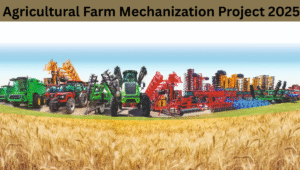
💧 Advanced irrigation and the adoption of mechanization to improve efficiency and minimize waste.
🍊 Mangoes, cotton, and citrus fruits are used to diversify the export-oriented agricultural product mix.
❄️ Developing cold-chain logistics and technologies to enhance farmer’s income by minimizing post-harvest improvement losses.
Connectivity: Building the Infrastructure Backbone
Rail Modernisation (ML-1)
Central to the plan is the $6.8b upgrade of the Main Line-1 (ML-1) railway. Twice as fast trains, greater rail capacity for freight, stronger links from business to ports and market, will all be delivered by this project. It is to slash logistics costs significantly, making Pakistani exports to become more competitive.
Gwadar Port as a Regional Hub
Gwadar Port is envisaged in the Action Plan as a central and important trade hub that will play a significant role in the development of trade in the region. With modern and suitable port facilities, free zones and improved roads and rail, Gwadar will become an active gateway for trade between China, Central Asia, the Middle East and Africa, opening a new chapter in the global trade network.
Security For Joint Action Plan 2025–2029
Dedicated Security Forces
Keeping in mind the concerns of instability in Balochistan and other regions, this plan is providing a robust security framework. A 12,000-strong security force has been arranged to protect SEZs, industrial plants and critical infrastructure.
Community Engagement
In addition to physical protection, the project aims to educate people about the importance of this program for development, health care, and employment initiatives, and to gain the government’s trust in engaging the community in developing projects that are trying to resist development.
Human Capital and Social Inclusion For Joint Action Plan 2025–2029

Empowering the Workforce
Joint Action Plan 2025–2029 recognizes that the zones can’t succeed without trained workers. Considerable emphasis is, therefore, focused on Polytechnics, scholarships, and industry/institute linkages. Under this, Gwadar’s specialized training centers will be established to provide port operation training, logistics management, and technical trades to the young people.
Gender Inclusion
The plan also stresses the participation of women in industrial and agricultural projects. Finally, promoting female entrepreneurship and vocational training for women are encompassed in the broader objectives of equity and empowerment
Also Read AI-Powered News Channel Launch 2025Global and Regional Implications
Pakistan as a Trade Hub
Aligning SEZs, ports and railways with regional markets will make Pakistan a key player in the global supply chain. Through roads and railways, Pakistan will be centre of trade & trade overland route for Central Asian along with Afghanistan and Middle Eastern states.
A Model for Belt and Road Cooperation
Joint Action Plan 2025–2029 also comprises as an example for BRI. It demonstrates that by linking industrial growth with agriculture up-liftment and social inclusion, large scale cooperation can generate prosperity for all.
Environmental Sustainability
Green Industrialisation
The plan emphasises the importance of environmentally sustainable growth. Solar and wind are being favoured as renewable energy to power SEZs and to lower carbon emissions.
Climate-Resilient Agriculture
But climate-adjusting seeds, water-efficient crops and advanced irrigation techniques can help farmers adapt to climate change. Pakistan’s shift in agriculture is therefore not just a question of higher yields, it is a question of long-term resilience.
Technology and Innovation Corridors For Joint Action Plan 2025–2029

Digital Transformation
Joint Action Plan 2025–2029 places Pakistan as central to China’s digital vision.
🤖 Industrial and agricultural applications of AI.
🏭 Smart factories and digital governance with 5G connectivity.
🛰️ Satellite internet and cloud computing for digital access across the country.
📊 Utilization of big data for industrial planning and resource management.
Research and Development Partnerships
The two nations’ universities and research institutions will work together to create new technologies. These include biotechnologies for agriculture, renewable energy technologies and new advanced manufacturing techniques.
Conclusion
Joint Action Plan 2025–2029 is not just an agreement: it is a roadmap for change. By focusing on SEZs, investment in industrial parks, and agricultural modernisation backed with infrastructure, technology and human resource development, Pakistan is advancing a new age of prosperity.
What is the Joint Action Plan 2025–29?
The Joint Action Plan 2025–29 is a bilateral roadmap between Pakistan and China that outlines key initiatives for industrialisation, agricultural modernisation, infrastructure development, and technological transformation. It is part of CPEC Phase II and focuses on creating jobs, boosting exports, and modernising Pakistan’s economy.
What role do SEZs play in the plan?
Special Economic Zones (SEZs) are central to the plan. They provide tax incentives, world-class infrastructure, and streamlined regulations to attract both domestic and foreign investment. SEZs are expected to create over 2.2 million jobs and strengthen Pakistan’s manufacturing and export capacity.
Which SEZs and industrial parks are included?
Major SEZs under the plan include:
Rashakai SEZ (Khyber Pakhtunkhwa)
Allama Iqbal SEZ (Punjab)
Dhabeji SEZ (Sindh)
Agricultural SEZs and industrial parks near Gwadar and other key trade hubs.
How does the plan modernise agriculture?
The plan introduces technology-driven farming through satellite imagery, digital tools, mechanisation, and smart irrigation. High-value crops like cotton, mangoes, and citrus fruits are prioritised for global export markets. Cold-chain logistics and food-processing SEZs will reduce post-harvest losses and raise farmer incomes.
What infrastructure projects are included?
Key infrastructure initiatives are:
ML-1 Railway modernisation worth $6.8 billion.
Expansion of Gwadar Port into a major logistics hub.
Road and energy projects to support SEZs and agricultural value chains.